Many people say they want to become a famous motivational speaker. What they usually mean is that they want to be heard, respected, and impactful.
That’s an important distinction.
Motivational speaking is not just about standing on a stage and delivering a motivational speech. It is about responsibility. Influence. And the ability to carry someone else’s hope without exploiting it.
Tony Hoffman has seen the motivational speaking world from the inside. As a requested speaker for schools, organizations, and conferences, he understands both the opportunity and the pressure that comes with public speaking at scale. Fame may catch attention, but credibility sustains a whole career.
What It Really Means to Be a Famous Public Speaker
A famous motivational speaker is not defined by follower counts, viral clips, or how big the stage looks from the back of the room. They are defined by consistency, clarity, and the ability to create impact over time.
Most successful speakers did not wake up famous. They built their voice slowly, one room at a time. One audience at a time. Their message was shaped through repetition, feedback, and real-world testing. It held up when the room was small and when the pressure was high. It evolved because it had to.
A professional motivational speaker earns that title because their message is rooted in lived experience or hard-earned expertise. It solves a real problem for a specific target audience, not a vague idea meant to impress everyone. It can be delivered clearly under pressure, across different audience sizes and environments, without losing its meaning.
Tony often reminds aspiring speakers that the goal of motivational speaking is not to perform. It is to serve. When the focus stays on value instead of validation, credibility follows.
Start Your Motivational Speech: Your Personal Story and Message
Every motivational speaking career begins with a personal story. Not a performance. Not a persona. A real story.
Your story does not need to be dramatic. It needs to be honest.
Tony Hoffman’s journey through addiction, incarceration, recovery, and elite performance is powerful because it is real. But the lesson is not the extremes. It is the clarity gained through lived consequences.
Ask yourself:
- What have I lived that shaped how I see the world?
- What mistakes taught me something I can now articulate clearly?
- What message do people already come to me for?
Your personal story becomes the foundation of your motivational speech. Over time, it evolves into frameworks, lessons, and practical insight.
Without a clear message, motivational speaking becomes noise.
Understand Your Target Audience Before You Ever Take the Stage
One of the most common mistakes in motivational speaking is trying to be relevant to everyone. When a message is built for everyone, it rarely lands deeply with anyone. Famous motivational speakers understand this early. They are clear about who they serve and why their message matters to that specific audience.
Your target audience shapes everything. The way you speak, the examples you use, the tone you carry, and the problems you address all depend on who is sitting in the room. A message meant for middle schools or high schools requires a different approach than one delivered to corporate leaders.
Students navigating mental health challenges need language that feels safe and real. Professionals in leadership environments need clarity, accountability, and application. Support groups and recovery communities require honesty without judgment. Conferences focused on resilience, sales, or performance demand relevance and respect for the pressure people carry.
Tony’s message resonates across industries because it adapts without losing its core. He understands how to speak to students, executives, and teams under pressure while holding the same standards of responsibility and clarity. The message stays intact, even as the delivery shifts.
When speakers do not understand their ideal client, their message starts to drift. When they fail to respect their audience’s reality, the disconnect is immediate. People can feel when a speaker is talking at them instead of with them, and no amount of motivation can cover that gap.

Develop Real Public Speaking and Communication Skills
Public speaking is not a personality trait you’re born with. It is a skill that is developed over time through practice, feedback, and repetition. Every professional motivational speaker you admire started somewhere uncomfortable, learning how to communicate clearly under pressure.
Being a good speaker requires more than confidence or enthusiasm. It requires structure so your audience can follow your message without effort. It requires strong storytelling that connects ideas to real human experience. Controlled pacing matters because rushing signals anxiety, while slowing down creates authority.
Emotional awareness allows you to speak with empathy instead of performing at people. And the ability to read the room helps you adjust in real time, especially when audience members are distracted, skeptical, or carrying stress of their own.
These skills are not built in theory. They are built in front of people.
That means practicing speaking anywhere you can, even when the room is small, or the event is unpaid:
- Free events where the stakes are low and the feedback is honest, this will give you a chance to build your opportunities before you’re chasing a paycheck
- Support groups where listening matters as much as speaking
- Schools where attention must be earned, not assumed
- Community organizations where trust is built slowly
- Small conferences that test your ability to stay clear under pressure
Many successful speakers began while working a full-time job. They spoke on nights and weekends. They accepted early speaking opportunities that didn’t come with prestige or pay. Not because they lacked value, but because skill is built through repetition, not shortcuts.
Learn the Goal Setting Business Side of Motivational Speaking
Motivational speaking is both a calling and a business. Oftentimes, when starting, you will be your biggest advocate and responsible for making yourself a name.
To make this a whole career, you need to understand:
- Demo Videos
- Website Building
- Pricing
- Contracts
- Travel logistics
- Client communication
- Follow-up systems
Some speakers choose to remain independent and be their own boss. Others build teams or work with agencies. Tony built his speaking career deliberately, ensuring that the business never overshadowed the message. That balance matters. Without structure, burnout is inevitable.
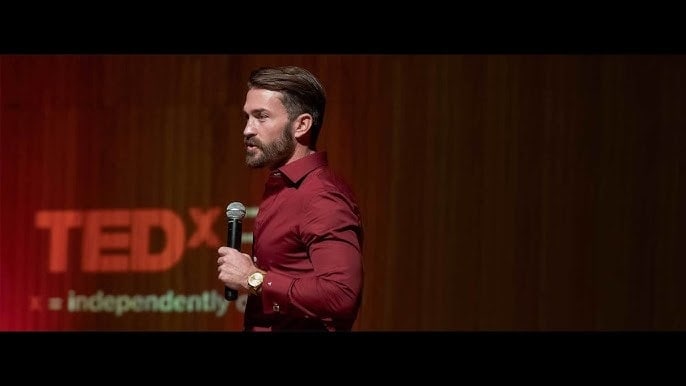
Why TED Talks Are Not the Shortcut People Think
Many aspiring speakers believe TED Talks are the gateway to success.
They are not.
TED Talks are curated, competitive, and often unpaid. They can help visibility, but they rarely build a sustainable speaking business on their own.
Most famous motivational speakers were already successful before TED Talks noticed them.
Focus on service first. Visibility follows substance.
Learn from Other Keynote Speakers without Copying Them
Studying other speakers is useful. Copying them is not.
Every famous motivational speaker has influences, but none of them built lasting careers by imitation.
Tony Robbins, for example, is one of the most recognized motivational speakers in the world, not because others followed his style, but because he spent decades developing his own. His success came from relentless practice, message refinement, and a deep understanding of how people change, not from chasing trends or replicating someone else’s delivery.
Watching other motivational speakers can teach you important fundamentals. You can study how they structure a motivational speech so it builds momentum instead of drifting. You can observe timing, pacing, and how they engage audience members emotionally without overwhelming them. You can learn how experienced keynote speakers hold attention in large rooms and adapt when energy shifts.
But the goal of observation is understanding, not imitation.
Your voice is shaped by your life experience, your expertise, and the people you are trying to serve. When speakers perform someone else’s style, audiences feel it immediately. It creates distance instead of connection.
People respond to clarity and authenticity, not borrowed confidence.
The most successful speakers don’t sound like anyone else. They sound like themselves, refined through repetition and grounded in purpose.
How Long Does It Really Take to Become a Motivational Speaker?
There is no fixed timeline for becoming a successful motivational speaker. There is only consistency.
Most well-known speakers did not rise quickly or predictably. They spent years refining their speeches, delivering talks to small rooms, adjusting their message after missteps, and learning directly from audience feedback. Progress was often slow at first, and momentum built gradually through repetition rather than recognition.
A motivational speaking career grows through discomfort. Early stages often involve uncertainty, unpaid or low-paid speaking engagements, and the willingness to show up without guarantees. This phase matters. It is where clarity sharpens, communication skills strengthen, and confidence becomes earned rather than imagined.
Over time, consistency compounds. The message becomes cleaner. Delivery becomes steadier. Audiences respond more clearly. What looks like overnight success is usually the result of years of quiet work.
Fame is unpredictable and often outside your control. Impact is not. When speakers focus on serving their audience well, refining their voice, and showing up consistently, influence follows its own timeline.

Put in the Work to Become a Famous Motivational Speaker
If you want to become a famous motivational speaker, start by becoming a useful one.
Build real skills. Know exactly who you serve. Respect the weight of standing in front of people who are trusting you with their time, attention, and often their struggles. Practice relentlessly, not for applause, but for clarity.
Motivational speaking is not about being heard by the world. It is about being heard by the people who need your message at the right moment in their lives. Fame, when it comes, is a byproduct. Impact is the goal.
Tony Hoffman’s career reflects this truth. His work was built through lived experience, disciplined preparation, and a commitment to speaking honestly about resilience, mental health, and personal responsibility. He didn’t chase stages. He earned trust. And that is what sustains a speaking career over time.
If you’re exploring this path or looking to bring a speaker who delivers real substance to your next event, Tony Hoffman brings a message shaped by experience, accountability, and clarity under pressure. To explore booking Tony Hoffman to speak, fill out our booking form. Remember: the right message, delivered with credibility, can change how people think, lead, and move forward.
Sources
Developing effective communication skills. (2007). Journal of Oncology Practice, 3(6), 314–317.
Liang, H. Y., & Kelsen, B. (2018). Influence of personality and motivation on oral presentation performance. Journal of Psycholinguistic Research, 47(4), 755–776.

