
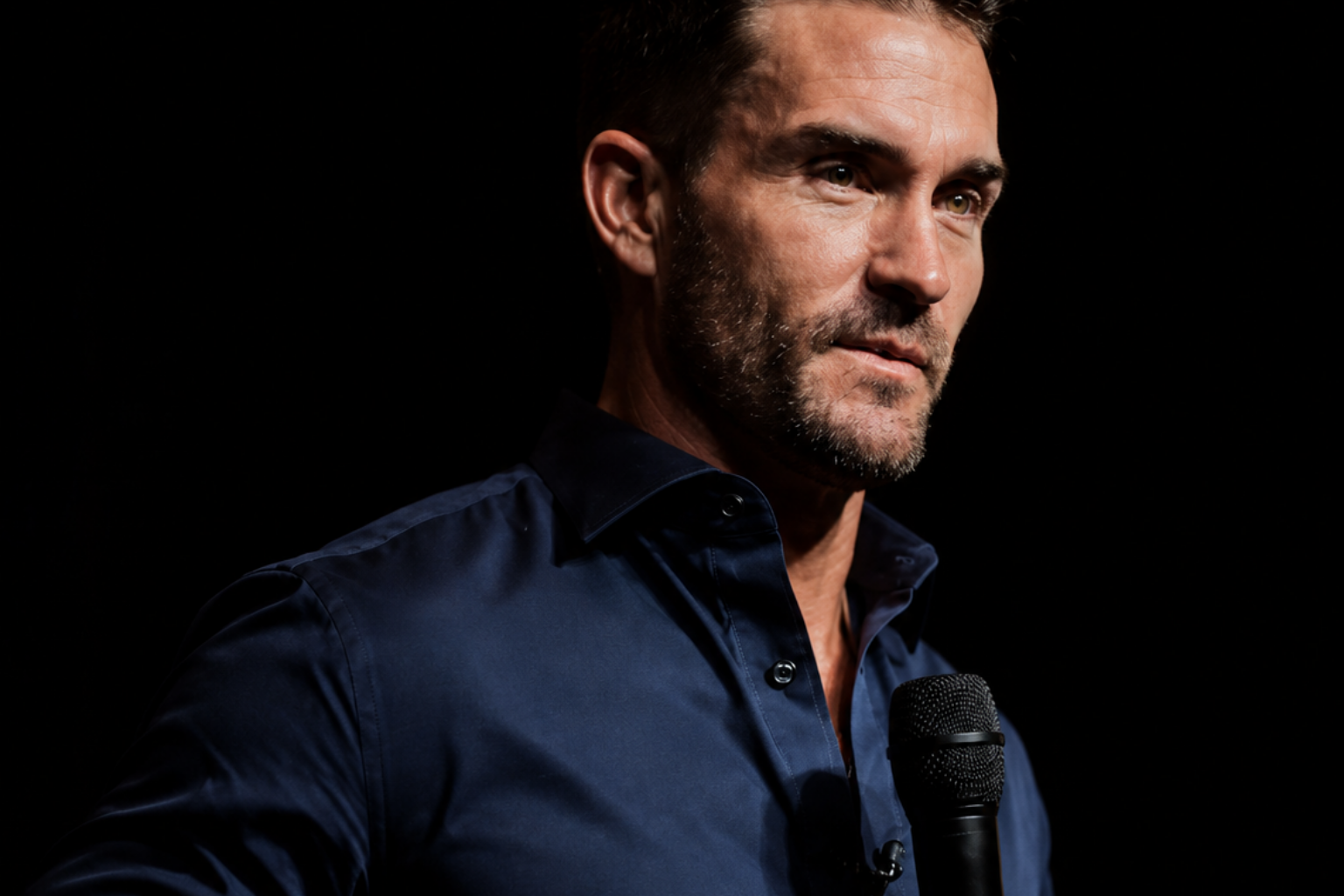
Tony Hoffman knows what it feels like to sit alone in a prison cell carrying the weight of addiction, failure, and uncertainty about what comes next. That experience shaped how he now speaks about empathetic leadership: leadership that recognizes pain, connects with people, and creates environments where individuals don’t have to hide what they are carrying. For Tony, real leadership is not defined by authority alone. It is defined by the ability to understand people while still helping them grow.
What Is Empathetic Leadership?
Empathetic leadership is the ability to understand, acknowledge, and respond to team members’ emotions and experiences while keeping business goals in focus. It is not about ignoring performance or lowering expectations. It means recognizing that the people behind the numbers matter as much as the numbers themselves.
As a mental health speaker, Tony Hoffman has seen how this shift can change the way organizations communicate, lead, and support their people. When leaders move beyond spreadsheets and take the time to understand the human beings in front of them, trust grows, and teams become more willing to speak honestly about challenges.
| Leadership Attribute | Traditional Management | Empathetic Leadership |
|---|---|---|
| Communication Style | Telling and directing | Active listening and thoughtful inquiry |
| Handling Failure | Punitive and reactive | Curious, supportive, and solution-focused |
| Core Focus | Primarily results-driven | Human-centered and growth-focused |
| Transparency | Guarded and closed off | Appropriately open and authentic |
Before Tony began speaking on stages across the country, he competed as a professional BMX athlete. His path later took him through addiction, incarceration, recovery, and the difficult process of rebuilding his life. That experience shaped the way he now thinks about leadership.
Tony learned that real influence requires honesty. Recovery could not be built on image or performance, and neither can leadership. An empathetic leadership style asks leaders to acknowledge difficulty, own mistakes, and create space for others to do the same.
That does not mean oversharing or removing professional boundaries. It means leading with enough vulnerability and humility that people feel safe being honest about what they need, where they are struggling, and what will help them move forward.
Key Pillars of Empathetic Leadership
- Active listening means giving someone full attention without preparing a response while they are still speaking. Leaders who listen to understand are better positioned to recognize concerns, clarify expectations, and respond thoughtfully.
- Perspective-taking asks leaders to consider experiences beyond their own assumptions. Understanding another person’s perspective does not require agreement, but it can clarify what is influencing their behavior or performance.
- Compassionate action moves empathy beyond awareness. A leader may adjust an unrealistic workload, provide appropriate mental health resources, or offer guidance when someone is struggling. The goal is responsible support, not simply sympathy.
- Vulnerability and humility also matter. Strong leaders do not need to pretend they have every answer. Tony’s experience with emotional vulnerability in recovery reinforced how appropriate honesty can create space for others to speak openly about what they need.
Why Is Empathy in Leadership Important?
If you are wondering why empathy in leadership matters, the answer is simple. People only perform when they feel safe. They need to know they are truly understood. This is true in life-or-death addiction recovery situations. It is equally true in high-stakes corporate environments.
The importance of empathy in leadership is backed by hard numbers. Employees with empathetic leaders are highly motivated. In fact, 61 percent of these workers report being innovative. Only 13 percent of employees without empathetic leaders say the same. When leaders show they actually care, teams take smart risks. They push boundaries.
Workplace stress is at an all-time high. Recent data shows a massive mental health decline across the board. About 67 percent of workers experience increased stress. Another 57 percent report increased anxiety. Empathy in leadership matters because it’s about basic survival. An empathetic leader recognizes these red flags immediately. They intervene long before a person completely breaks down.
According to the National Library of Medicine, strong empirical evidence shows that empathetic leadership promotes innovative behavior. It shows that feeling supported directly boosts creative thinking. When people feel secure, they do not hide their mistakes. They learn from them instead.
Mitigating Burnout and Navigating Uncertainty
In today’s workforce, uncertainty can create fear, hesitation, and isolation inside a team. Empathetic leadership gives people space to talk honestly about what they are experiencing and helps leaders respond before stress becomes unmanageable. Practicing empathy is an important leadership skill because it strengthens emotional intelligence, open communication, and trust during difficult conversations.
Burnout often builds gradually, which means paying attention to behavioral changes matters. Leaders who stay connected to their teams are more likely to notice when someone is struggling or no longer feels heard.
Common signs of burnout may include:
- Increased fatigue or low energy
- Irritability or a shorter temper
- Pulling away from team discussions
- Declining motivation or engagement
- Difficulty concentrating or with decision-making
- Missing deadlines or struggling with tasks that were once manageable
- More frequent absences or physical complaints
- Growing cynicism about work or the organization
Tony Hoffman often emphasizes that empathy begins with being fully present. Leaders do not need to diagnose employees or solve every personal problem. They need to show genuine interest, recognize different perspectives, and create enough psychological safety for people to feel understood.
The Transformational Power of Empathy on Teams
Empathetic leadership is not a cure for every business problem, but it is an important leadership skill that shapes how people communicate, handle pressure, and respond to one another. When employees feel respected and understood, they are more likely to contribute ideas, stay engaged, and build positive relationships across the organization.
Empathetic Leaders Build Trust Through Self-Awareness
Tony Hoffman’s perspective on empathy comes from lived experience. During addiction and incarceration, meaningful change became possible when people looked beyond his mistakes and saw someone still capable of growth.
That experience shaped the way Tony now speaks about leadership. Empathetic leaders understand that self-awareness comes first. Before managers can respond well to someone else, they need to understand their own stress, assumptions, and reactions.
Research on empathetic leadership also emphasizes this connection between self-awareness and effective communication. Leaders who slow down, consider a person’s perspective, and listen before reacting are better positioned to build trust and handle difficult conversations with clarity.
Emotional Intelligence Improves Team Dynamics
Emotional intelligence helps business leaders and middle managers recognize what is happening beneath the surface of a team. A missed deadline, sudden withdrawal, or tense interaction may be more than a performance issue.
Leading with empathy means staying curious long enough to understand the team’s perspectives before making assumptions. That does not remove accountability. It creates better conflict resolution by helping leaders understand the context behind a problem before deciding what comes next.
When managers demonstrate that kind of awareness, human interactions become more productive. Employees feel heard, communication improves, and teams develop a greater sense of trust and connection.
Empathy Is Important When Tough Decisions Have to Be Made
Empathy matters because leadership is not always comfortable. Business leaders still have to set expectations, address poor performance, make tough decisions, and protect the organization’s health.
Leading with empathy changes how those moments are handled. A difficult decision can still be communicated with honesty and respect. An employee can still be held accountable while being treated as a person, not a problem.
That balance supports both well-being and performance. It also helps create a culture where showing respect is not viewed as weakness, but as part of effective leadership.
More Empathy Can Create Positive Outcomes
The effects of empathy often appear in small, repeated moments. A manager listens instead of interrupting. A leader asks one more question before reacting. A difficult conversation ends with clarity instead of resentment.
Those choices compound over time.
More empathy can strengthen employee retention, improve team dynamics, support innovation, and create positive outcomes because people are more willing to contribute when they feel safe enough to speak honestly. It is often treated as a soft skill, but it directly affects communication, collaboration, decision-making, and long-term success.
Tony’s message is simple: leadership is not only measured by results. It is also measured by the kind of environment leaders create while pursuing them.
Bring Empathetic Leadership to Your Organization
Empathetic leadership is not about lowering standards. It is about understanding people well enough to lead them with greater clarity, accountability, and respect. Tony Hoffman brings that message to organizations through lived experience, practical leadership lessons, and an honest understanding of what it takes to rebuild after adversity. His presentations help business leaders, managers, and teams strengthen communication, build trust, and create cultures where people can perform at a high level without losing sight of their well-being.
If your organization is ready for a deeper conversation about leadership, resilience, mental health, and human connection, contact Tony’s team to discuss bringing him to your next event. The strongest leaders do more than drive results. They create environments where people feel understood, supported, and capable of doing their best work.
Sources
Robayo-Sanchez, K. (March 11, 2026). Empathetic Leadership in Corporate Communication. National Library of Medicine.
Ma, G. (May 22, 2024). Empathetic leadership and employees’ innovative behavior. National Library of Medicine.
University of St. Thomas. (January 28, 2025). Empathy Is a Cornerstone of Emotional Intelligence and Team Success. University of St. Thomas.
Northeastern University. (August 2, 2018). How to Become a More Empathetic Leader or Manager. Northeastern University.
Harvard University. (March 6, 2026). Building Empathetic Leadership. Harvard University.
FAQ
Why Is Empathy an Important Leadership Skill?
Empathy is an important leadership skill because it helps managers understand how employees are experiencing pressure, change, and conflict. Research shows that trust, emotional intelligence, and stronger human relationships are closely tied to retention, collaboration, and greater success across teams.
Why Is Empathy Important for Well-Being?
Empathy matters because attentive leaders can recognize signs of exhaustion before burnout becomes more severe. Regular check-ins, realistic workloads, and conversations about self-care can support employee well-being while helping teams remain productive and connected.
How Does Leading With Empathy Build Trust?
Leading with empathy shows employees that their ideas, challenges, and perspectives matter. When people feel heard and respected, trust grows. Research suggests that high-trust workplaces experience stronger engagement, collaboration, and employee retention because people feel safer contributing honestly.
Can Empathetic Leadership Lead to More Promotions?
Empathy alone does not guarantee more promotions, but emotional intelligence can strengthen many of the skills associated with effective leadership. The ability to communicate clearly, resolve conflict, build relationships, and understand different perspectives can help professionals become stronger candidates for greater responsibility.
How Does Empathy Improve Decision Making?
Empathy improves decision-making by giving leaders a fuller understanding of how choices may affect the people involved. Rather than relying only on numbers or assumptions, empathetic leaders consider different perspectives while still making tough decisions based on the organization’s needs. This balance can lead to clearer communication and more positive outcomes.
Author

Pro BMX athlete. Recovering addict. Motivational speaker. Tony Hoffman has lived several lives, and now he shares all of them. Since his release from prison in 2008, Tony has become one of the most powerful voices in mental health and substance abuse awareness.