
The Rule of 10 is one of those concepts that sounds simple until you realize how much it explains about energy, ecosystems, and the way resources move through living things.
It shows up in science class, but the lesson behind it goes further than any food chain.
Picture this: you’re sitting on a hard, cold bench in a place where the minutes feel like hours, and every decision weighs heavily, even the tiniest ones.
In that moment, Tony found himself staring at the wall, gripping onto the next ten minutes like it was all he had left to hold.
Sometimes, it’s those ordinary stretches of time, just ten minutes, that become the start of something extraordinary.
You might’ve heard people talk about the Rule of 10 in different ways, but there’s a quiet kind of magic that happens when you use it to tackle life’s hardest moments, one small, steady effort at a time.
What Is 10 Rule or Rule of Ten?
The rule of 10 is not just a science concept.
It is a survival strategy.
In ecology, it describes how energy moves through a food chain, where only 10 percent of what one organism consumes gets passed on to the next level, and the rest is lost.
But the version that changed my life had nothing to do with biology.
It had everything to do with showing up for ten minutes when I had nothing left.
The principle is the same either way: small, consistent input produces real output over time, and what you invest at the bottom of the pyramid determines what is possible at the top.
If you want to bring that kind of message into your organization, your school, or your recovery community, motivational speaking is where it starts.
What Is the Rule of 10? (And Why It Matters)
What is the rule of 10, really?
You can find a 10 rule in almost every professional field. In biology, the 10 percent rule explains how energy moves through an ecosystem.
In the corporate world, founders use the rule of 3 and 10 to understand how organizations break and rebuild as they scale. In medicine, paramedics rely on the EMS burn Rule of Tens to quickly calculate life-saving fluids, and surgeons even follow a rule of 10s for cleft lip repairs.
But for your personal life, the Rule of 10 usually breaks down into three popular methods.
First, the 10-minute rule is a simple trick for motivation. You commit to doing a hard task for just ten minutes to break your own resistance.
Second, the 10X rule is a goal-setting strategy where you aim ten times higher than your original target.
Finally, the 10-10-10 rule is a framework for making choices. It forces you to look at a decision and ask how it will affect you in ten minutes, ten months, and ten years.
These ideas might sound like standard self-help advice. On the surface, they are great for building habits or boosting productivity at work.
But when you apply these concepts to the fight of your life, they stop being simple life hacks. They become survival tools.
The ’10-Minute Rule’ That Sparked My Recovery
When I was sitting in a prison cell, my BMX career felt like a lifetime ago.
Methamphetamine had stripped away everything I cared about.
In those early days, the thought of rebuilding my life was absolutely paralyzing. Procrastination is incredibly common in early addiction recovery. A lack of structure can leave you with too much empty time.
Studies on procrastination in early recovery show that delaying decisions often leads straight back to old habits. Breaking that inertia is critical.
It is easy to put off the hard work of change when the mountain looks too high to climb, especially when your brain is chemically adjusting to the absence of drugs.
The 10-Minute Rule to Survive
I did not know it at the time, but I started using the 10-minute rule just to survive the day.
The rule is simple.
You do not need motivation to start. You just need to commit to ten minutes of effort.
If I felt completely overwhelmed by shame, I would tell myself to just read a book for ten minutes. If I felt the heavy weight of despair, I would pace my cell and pray for just ten minutes.
Taking small steps in recovery breaks the ice of your own resistance.
Those ten minutes of consistency interrupted the loud, negative thoughts in my head. When you commit to a tiny action, you bypass the need to feel ready. You just move. Ten minutes of reading turned into an hour. Ten minutes of praying turned into a foundation for an entirely new life.
Rebuilding your life after addiction happens in these quiet, unseen moments of discipline.
Applying Different ’10 Rules’ to Sobriety
Motivation is necessary, but it will eventually fade. You need practical tools to keep moving forward on the days when you feel exhausted.
The different variations of the 10 rule offer powerful frameworks for goal setting and decision making. They help you shift your focus from simply surviving to actually thriving. Let’s look at how these common strategies translate directly into the gritty reality of addiction recovery.
| Rule Variation | General Application | Application in Recovery |
|---|---|---|
| 10-Minute Rule | Overcoming procrastination to start a difficult task. | Breaking the paralysis of shame by taking one small action toward healing. |
| 10X Rule | Setting massive business or financial goals. | Committing to a life transformation so big that old habits cannot fit into it. |
| 10-10-10 Rule | Weighing everyday choices for their long-term impact. | Pausing to evaluate the true, devastating cost of a potential relapse trigger. |
The 10X Rule for Rebuilding Your Life
The 10X rule is famous in the business world for pushing people to take massive action. In recovery, this rule is not about chasing money or status.
It is about setting goals for a life so deeply fulfilling that your old habits simply have no room to exist. When you leave a treatment center, your goal should not just be to stay clean.
That sets the bar far too low.
Apply the 10X rule to your personal transformation. Instead of just trying to stay out of trouble, decide to become a mentor to someone else.
Instead of just getting a job, aim to rebuild every broken relationship in your family. You need a vision that pulls you forward. When you aim ten times higher, you build a resilient, purpose-driven life that naturally repels the desire to return to your past.
The effort required to hit these massive targets leaves no room for old, destructive behaviors.
The 10-10-10 Rule for Navigating Triggers
Impulse control is one of the hardest skills to learn.
The 10-10-10 rule forces you to pause and look at the actual consequences of your choices.
Imagine you are facing a severe trigger, and your brain is screaming for relief. Stop and ask yourself three questions before you act.
How will this decision feel in ten minutes? You might feel temporary numbness or a fleeting high.
How will it feel in ten months? You might be dealing with the fallout of a lost job, shattered trust, or a return to a jail cell.
How will it feel in ten years? A single impulsive choice today could rob you of a decade of peace, while choosing to walk away builds a decade of pride.
This framework is a vital tool for relapse prevention. It strips away the lie that doing it just one more time will not hurt.
My Rule of 10: Ten Commitments for a Transformed Life
Recovery is not just about stopping a bad habit. It is about building a completely new foundation. Over the years, I have developed my own rule of 10.
These are ten non-negotiable commitments that keep my faith strong, my mind clear, and my feet on solid ground.
These principles are deeply tied to a faith-based recovery approach, anchoring your transformation in daily action.
- Tell the truth. Honesty is uncomfortable, especially when you have spent years hiding behind substances. Tell the truth even when your voice shakes, because lies will quickly drag you back to the bottom.
- Serve someone else. Selfishness fuels substance use disorders. Helping another person heal shifts your focus outward, breaks the cycle of deep isolation, and gives your pain a real purpose.
- Connect with God for 10 minutes every morning. Before you look at your phone, watch the news, or rush into the chaos of the day, sit in complete silence. Pray, read, and listen to build your spiritual armor.
- Own your past actions. Stop pointing fingers at the world. Taking full responsibility for your past is the only way to gain control of your future.
- Forgive yourself. You cannot walk forward if you are carrying the heavy baggage of yesterday’s mistakes. Grace is real, and you must accept it to heal.
- Protect your peace. Audit your circle. If certain places or people pull you backward, you must cut those ties immediately without apologizing.
- Embrace the uncomfortable. Real growth always happens in the dirt. Do not run away or seek a quick escape when things get hard. Lean into the friction and learn from it.
- Show up consistently. Keep your promises, no matter how small they seem. If you say you will be somewhere at a certain time, be there.
- Seek wise counsel. You cannot do this alone. Find mentors who will tell you what you need to hear, not what you want to hear.
- Stay anchored in your “why.” Remember exactly where you came from. Never lose sight of the dark places, so you can fully appreciate the light.

Putting the Rule of 10 to Work for You
The rule of 10 is a flexible, highly effective framework for changing your life. It teaches you to start small with ten minutes of focused action.
It challenges you to think big by setting 10X goals for your future.
It also demands that you act wisely by evaluating your choices through the 10-10-10 lens.
Every person’s journey looks different, but these tools can help anyone build momentum out of stagnation.
Research even shows that storytelling and shared experiences are incredibly effective at driving health behavior changes. Hearing how someone else applied these simple rules can ignite the spark you need to start your own turnaround.
Small Percentages, Big Results
The 10 Percent Rule explains why energy is precious and why the direction you aim it matters more than the amount you have.
Whether you are a student trying to focus, a person in recovery trying to rebuild, or a professional trying to sustain the work without burning out, the principle is the same: what gets transferred to the next level of your life depends entirely on what you put in and what you stop wasting.
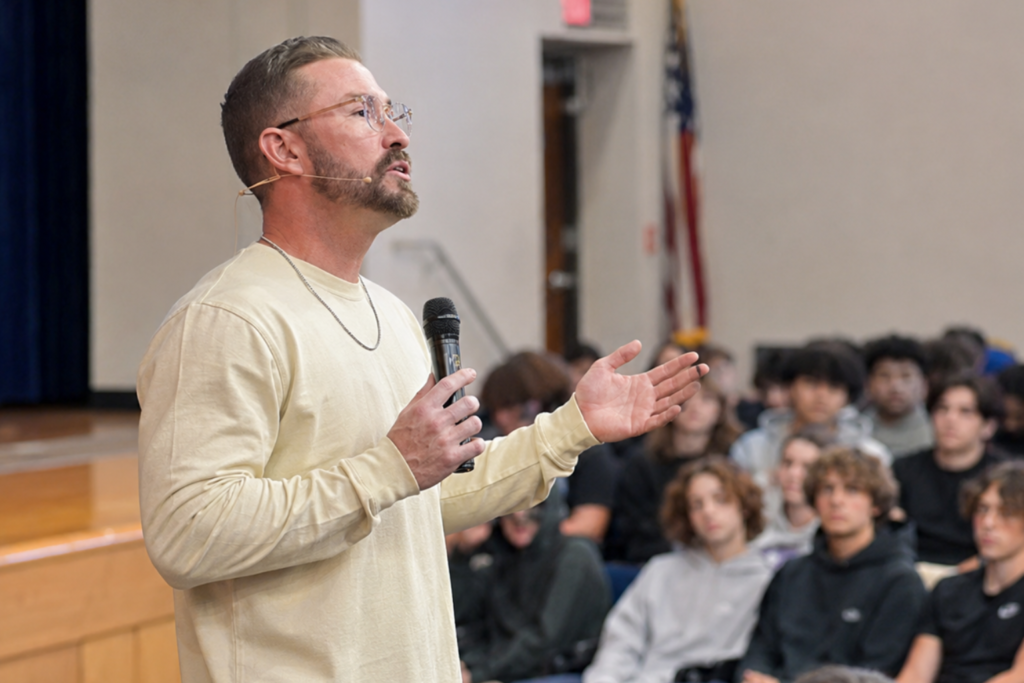
Tony Hoffman has built a career out of helping people redirect their energy toward something worth creating, whether that is on a stage, in a school, in a treatment program, or in a room full of people who need to hear that the process is not over.
If you are ready to bring that message to your audience, contact us or call (888) 707-3880 and let’s talk about how to make it happen.
Sources
StatPearls. (February 12, 2024). Rule of Nines. StatPearls.
StatPearls. (October 12, 2023). EMS Burn Rule of Tens. StatPearls.
National Center for Biotechnology Information. (December 23, 2015). Procrastination and Self-Efficacy Among Intravenous Drug Users on Methadone Therapy. PubMed Central.
National Center for Biotechnology Information. (February 11, 2023). Habits and Routines of Adults in Early Recovery From Substance Use Disorders. PubMed Central.
National Center for Biotechnology Information. Relapse Prevention: An Overview of Marlatt’s Cognitive-Behavioral Model. PubMed Central.
National Center for Biotechnology Information. (July 29, 2019). Belief, Behavior, and Belonging: How Faith is Indispensable in Substance Abuse Prevention and Recovery. PubMed Central.
Southern Illinois University Carbondale. (November 21, 2014). Faith Based Programs in the Treatment of Substance Abuse. Graduate School.
National Library of Medicine. (December 9, 2024). A systematic review and meta-analysis of health behaviour habit formation. PubMed.
National Center for Biotechnology Information. (August 6, 2025). Storytelling for health promotion: A scoping review. PubMed Central.
FAQ
What is the 10-minute rule for recovery?
The 10-minute rule is simple. You do not need motivation. You do not need to feel ready. You just commit to ten minutes of effort and start. Ten minutes of reading. Ten minutes of prayer. Ten minutes of movement. That small action breaks the ice of your own resistance, interrupts the negative thoughts, and builds the kind of consistency that quietly rebuilds a life.
How does the 10X rule apply to recovery?
In recovery, the 10X rule is not about money or hustle. It is about setting goals so big that your old habits have no room to exist. Do not just aim to stay clean. Aim to become a mentor. Aim to rebuild every broken relationship. Aim to build a life so fulfilling that going back makes no sense. When you aim ten times higher, the effort required leaves no room for destructive behavior.
What is the 10-10-10 rule and how does it help with triggers?
When a trigger hits and your brain is screaming for relief, the 10-10-10 rule forces you to pause before you act. Ask yourself three questions. How will this feel in ten minutes? How will it feel in ten months? How will it feel in ten years? That framework strips away the lie that one more time will not hurt and gives you a real look at what your choices are actually building.
Can small steps really make a difference in recovery?
Yes. Ten minutes of consistency is how a new life gets built. It does not start with a grand transformation. It starts with one quiet decision to do something small instead of nothing. Ten minutes of reading turned into an hour. Ten minutes of prayer turned into a foundation. Rebuilding your life after addiction happens in those unseen moments of discipline, not just the big ones.
What if I do not feel motivated to start?
That is exactly the point. Motivation is not the requirement. The 10-minute rule works because you bypass the need to feel ready and just move. Commit to ten minutes. That is it. The feeling follows the action, not the other way around. You do not wait to feel ready. You start, and readiness shows up somewhere in the middle.
Author

Pro BMX athlete. Recovering addict. Motivational speaker. Tony Hoffman has lived several lives, and now he shares all of them. Since his release from prison in 2008, Tony has become one of the most powerful voices in mental health and substance abuse awareness.