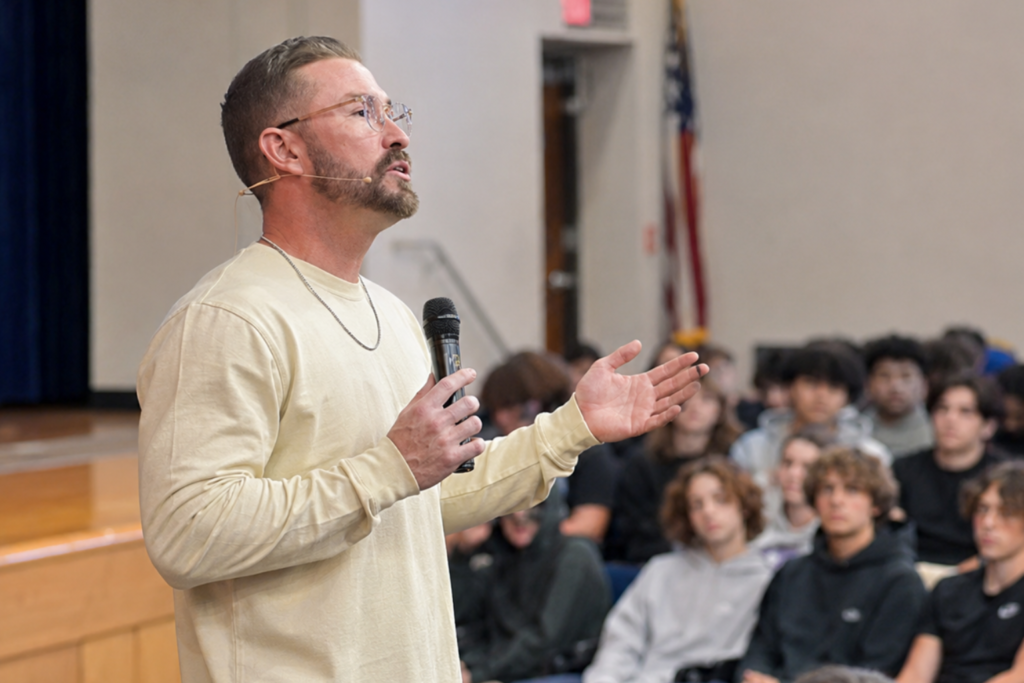

The first people Tony Hoffman lost to his addiction were not strangers. They were the family members who loved him most, and the trust he broke with them did not return with a single apology. It came back slowly, through years of small and consistent actions. So, how do you build trust in a relationship after it has been damaged? Tony’s lived experience shaped his answer: not through grand gestures, dramatic promises, or one perfect conversation. Trust is built by becoming someone whose words and actions match, especially when no one is watching, and repeating that consistency until the people you love begin to feel safe again.
What Trust in a Relationship Really Is
Before you can build trust, it helps to understand trust itself. In his work as a mental health speaker, Tony Hoffman often talks about how emotional safety is created through accountability, honesty, and actions that remain consistent over time.
Trust in a relationship is the felt sense that your partner has your best interests at heart, that their words match their actions, and that you can share your feelings without being harmed. Researchers Mayer, Davis, and Schoorman, in their widely cited integrative model of trust, describe trust as resting on three things: ability, integrity, and benevolence. In plain terms, you trust someone when they are capable, honest, and genuinely care about you.
Trust issues in relationships usually show up as a quiet question that never rests: can I count on this person? When the answer feels uncertain, the emotions underneath it, fear, doubt, and hurt, start to run the relationship.
The Foundation of Strong Relationships
Strong relationships are not built on never disappointing each other. They are built on emotional connection and a safe space where both people can be honest. When you feel safe with your partner, you can express emotions, admit mistakes, and share your feelings without bracing for judgment. That safety, and the mutual respect underneath it, is the foundation everything else stands on.
How Do You Build Trust in a Relationship?
Building trust is less about intensity than repetition. As relationship researcher John Gottman argues in The Science of Trust, trust is built in small moments of attunement, the ordinary times you turn toward your partner instead of away. Here is where the work of building trust actually happens.
Open and Honest Communication
Open communication is the engine of trust. It lets partners share their thoughts, feelings, and concerns without fear of judgment. Being honest does not mean saying every harsh thought out loud. It means being truthful, being clear about your needs, and acknowledging your partner’s feelings so both you and your romantic partner or family member feel understood and supported.
Communicate Openly Without Fear of Judgment
To communicate openly, you have to make it safe to be honest. That means learning to actively listen within a trusting relationship, and practicing self-compassion while listening to your partner’s perspective. When your partner talks, focus fully on them and on the feelings behind their words rather than planning your defense. Active listening shows you care, and it invites your partner to open up in return. A relationship where both people can talk about hard emotions without punishment is one where trust can grow.
Keeping Promises and Consistent Actions
Trust is not built through grand gestures. It is nurtured through small, consistent actions. Being on time, following through, and keeping promises may feel unremarkable, but they are what build a strong foundation. Every kept promise is a deposit that shows respect for your partner’s actions and expectations. Consistent actions tell your partner that your words can be trusted.
Vulnerability, Empathy, and Emotional Connection
Being vulnerable means showing your true self even when it feels risky. Sharing your fears, dreams, and feelings deepens intimacy and strengthens the emotional connection between partners. Empathy is the other half. When you understand and share your partner’s feelings and stay present and supportive when they need it, you build the emotional intimacy that keeps a relationship feeling safe. As that intimacy grows, so does trust, and the relationship becomes a team.
| Aspect | Building trust with a new partner | Repairing trust after betrayal |
|---|---|---|
| Starting point | A clean slate and open communication | A wound, past hurts, and broken trust |
| Main task | Showing up consistently over time | A genuine apology and full responsibility |
| What it needs most | Keeping promises and clear communication | Consistent effort, patience, and empathy |
| Timeline | Grows steadily with reliability | Slower, often many months of small proof |
What Causes a Lack of Trust
Lack of trust rarely appears out of nowhere. It can come from a betrayal like lying or infidelity, but it can also grow from many small letdowns that undermine trust over time. When promises are broken often enough, a partner stops expecting reliability, and the relationship runs on fear instead of safety. The feelings that follow, resentment and self-protection, make an honest connection harder.
Where Trust Issues Come From
Past experiences shape current relationships more than most people realize. Past hurts from earlier relationships, or from childhood, can follow someone into a new relationship and make trust feel dangerous even when the current partner has done nothing wrong. Naming these deeper issues, and the raw feelings and emotions attached to them, rather than blaming your partner, is the first honest step toward healing.

Rebuilding Trust After Broken Trust
Can you fix a relationship after betrayal? In most cases, yes, though it takes real work and real support from both people. Rebuilding trust is possible, but it is a process, not an event, and rebuilding trust always starts with the person who caused the harm.
Take Full Responsibility and Offer a Genuine Apology
Rebuilding trust begins with a genuine apology and full responsibility. That means owning the mistake without excuses, without blaming your partner, and without demanding instant forgiveness. Accountability, admitting your mistakes openly and showing genuine remorse for the hurt you caused, is what reassures a partner that you can be trusted again.
Address Past Hurts Openly
Rebuilding trust also means addressing past hurts rather than pretending they never happened. Old wounds and unspoken feelings can quietly poison a relationship, so discussing these issues openly helps both partners understand the root of the trust issues and slowly rebuild intimacy. This is uncomfortable, but avoiding it only lets unresolved issues fester.
Rebuilding Trust Takes Time
Here is the hard truth. Rebuilding trust requires time, and it requires patience and support from both of you. Rebuilding trust after a betrayal is one of the hardest things a couple will ever do. Trust is not restored with one good conversation. It is rebuilt through consistent effort and small, dependable actions repeated across the whole healing process, because rebuilding trust rewards steady proof over promises. Moving forward means letting new evidence slowly replace old fear.
Building Trust in a New Relationship
In a relationship, trust building starts before anything is broken. Show up consistently, set boundaries that build trust, communicate honestly, and let your actions and words align. It also helps to bring self-awareness to the table. If past experiences left you with trust issues, notice when your fear is about your history rather than your current partner, and use your own judgment about what is really happening now.
Whether you are learning how to build trust with a partner, wondering how you can trust your boyfriend again, or trying to help a girlfriend feel safe, the principle of building trust in a relationship is the same for everyone. You earn it by being consistently trustworthy and by giving your partner the safety and support to do the same. Setting healthy boundaries is part of this, because clear expectations make it easier to understand each other and to trust.
Practical Frameworks for Building Trust
There is no formula that can guarantee trust, but a few relationship frameworks can help couples stay intentional. The 3-6-9 rule encourages check-ins at three, six, and nine months. The 7-7-7 rule focuses on making regular time for connection. The 3-3-3 rule offers another way to schedule quality time and honest conversations.
The numbers are not the point. Consistency is.
The Core Qualities of Trust
Most trust-building models come back to the same qualities: care, commitment, consistency, communication, and character. Honesty, accountability, and empathy matter just as much.
Trust grows when your words and actions match, especially when things are uncomfortable.
Rebuilding Trust After It Is Broken
Rebuilding trust usually requires the same basic steps: acknowledge the harm, take full responsibility, apologize honestly, make real changes, and give the other person time.
You cannot pressure someone into trusting you again. You can only keep showing them that you are becoming trustworthy.
When a Partner Does Not Trust You
Do not try to win trust through arguments or bigger promises. Listen to what is underneath the doubt. Keep your word. Be transparent. Stay patient.
Trust is built piece by piece. Every honest conversation, kept promise, and accountable action becomes part of the foundation.
When to Seek Professional Help
Sometimes love and effort are not enough on their own, and that is not a failure. Professional help can offer additional insights and truly make a difference when relationship trust issues run deep. Couples therapy gives partners a structured, safe space to rebuild, and individual therapy can help you work through past hurts and painful emotions that predate the relationship. Sue Johnson, who developed emotionally focused therapy, showed in Hold Me Tight how much of trust is about secure emotional attachment, which a skilled therapist can help couples understand and repair. Reaching out for professional help is a sign of commitment, not weakness.

Tony Hoffman’s Take: Trust Is Rebuilt in the Small Moments
I know what it is to look someone in the eye and see that they no longer believe a word you say. When I was in my addiction, I broke my family’s trust so many times that my promises stopped meaning anything in my life. What was rebuilt was not a speech, and I speak for a living. It was showing up, over and over, when there was nothing to gain.
I learned that trust is not repaired in a big, dramatic apology. It is repaired in a thousand small moments where you do exactly what you said you would do, and where you sit with someone else’s feelings instead of defending your own. Author Brené Brown describes trust as the product of small, consistent actions, and I lived that. If you have hurt someone, or someone has hurt you, do not look for one grand fix. Look for the next small promise you can keep, and then keep it. Offer patience and support in the ordinary moments. That is where everything turns.
Final Thoughts
Trust is the quiet foundation that lets two people feel safe, and Tony Hoffman’s story is proof that even badly damaged trust can be rebuilt. The path is not glamorous. It is honesty when it is hard, promises kept when no one is watching, care for your partner’s feelings, and patience to let time do its work. Whether you are building trust with a new partner or rebuilding trust after a painful season, the same truth holds. Trust is earned in the small moments, again and again.
If this message would serve your team, school, or community, reach out through the contact form to have Tony speak. You can also explore his work as a mental health speaker and as a mental health speaker for parents and families.
Sources
Brown, B. (2018). Dare to Lead and the anatomy of trust. Random House.
Gottman, J. M. (2011). The Science of Trust: Emotional Attunement for Couples. W. W. Norton and Company.
Johnson, S. (2008). Hold Me Tight: Seven Conversations for a Lifetime of Love. Little, Brown Spark.
Mayer, R. C., Davis, J. H., and Schoorman, F. D. (1995). An integrative model of organizational trust. Academy of Management Review, 20(3), 709 to 734.
FAQ
How do you build trust in a relationship?
Building trust in a relationship starts with open and honest communication, consistent actions, and mutual respect. Trust develops when both partners keep their promises, communicate openly about their feelings, and demonstrate reliability over time. Whether you’re in a new relationship or a long-term partnership, trust building requires honesty, accountability, and a willingness to support each other’s best interests.
Can trust be rebuilt after it has been broken?
Yes, rebuilding trust is possible, but rebuilding trust takes time and consistent effort from both partners. The healing process often begins with acknowledging the hurt, offering a genuine apology, taking full responsibility for one’s actions, and making meaningful behavioral changes. Repairing trust also involves giving your romantic partner space to express emotions while demonstrating through consistent actions that positive change is occurring.
What causes trust issues in a relationship?
Trust issues can develop from broken trust, past experiences, unresolved issues, dishonesty, unmet expectations, or repeated behaviors that undermine trust. Previous relationships, family dynamics, or past hurts may also affect a person’s ability to trust. Self-awareness and understanding the root of these concerns can help couples address deeper issues rather than focusing only on surface-level conflicts.
How can couples improve trust and communication?
Couples can strengthen relationship trust by practicing honest communication, actively listening to each other’s concerns, expressing emotions respectfully, and discussing issues openly instead of avoiding conflict. Creating a safe space where both partners feel heard and respected helps foster emotional connection and intimacy. Couples therapy or individual therapy may also provide tools for improving communication and rebuilding trust.
When should we seek professional help to rebuild trust?
Professional help may be beneficial when trust issues continue despite sincere efforts to move forward, communication repeatedly breaks down, or unresolved issues continue affecting the relationship. A therapist can help both partners understand each other’s perspectives, establish healthy boundaries, improve communication, and develop trust-building strategies that support stronger, healthier relationships over time.
Author

Pro BMX athlete. Recovering addict. Motivational speaker. Tony Hoffman has lived several lives, and now he shares all of them. Since his release from prison in 2008, Tony has become one of the most powerful voices in mental health and substance abuse awareness.