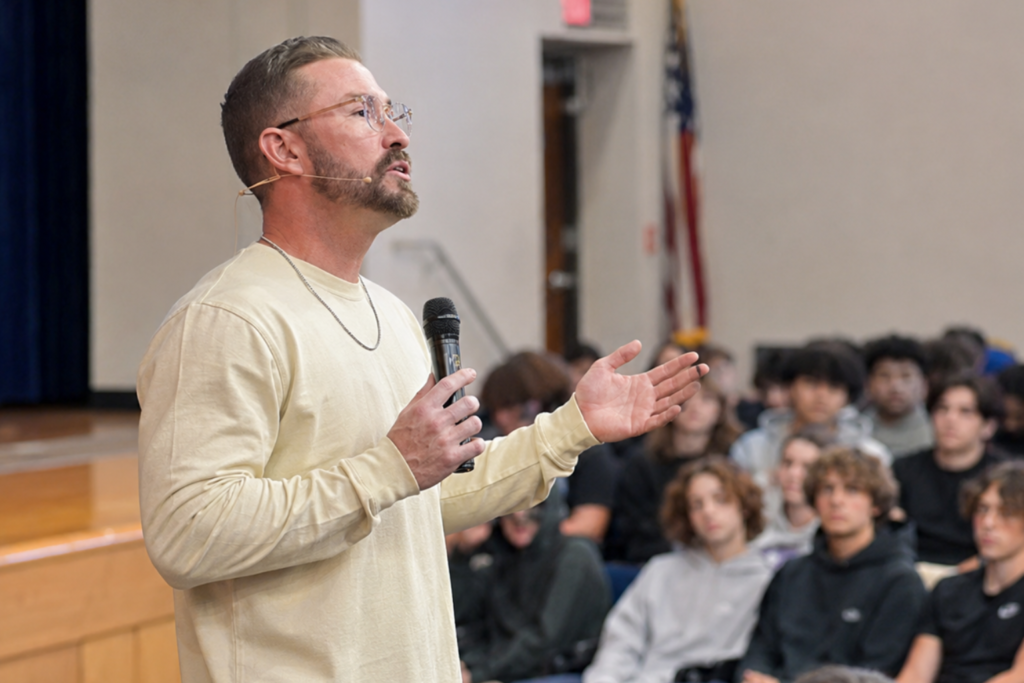

For most of his life, Tony Hoffman treated exhaustion like a badge of honor. He pushed through every warning sign until his body and mind finally forced the issue. That is what burnout does. It does not announce itself politely. It builds quietly, then arrives all at once, and by the time most high achievers start asking how to recover from burnout, they are already deep in survival mode. The good news is that recovery is possible. It becomes far more manageable when you understand what burnout actually is, recognize the patterns that keep it going, and give your nervous system the time, structure, and support it needs to heal.
What Burnout Actually Is
Burnout is more than a bad week. It is one of the most common challenges Tony addresses in his work as a corporate motivational speaker, especially with teams and leaders who have learned to confuse constant exhaustion with commitment.
The World Health Organization classifies burnout as an occupational syndrome resulting from chronic workplace stress that has not been successfully managed. Researchers Maslach and Leiter describe it through three core dimensions: emotional exhaustion, cynicism or detachment, and a reduced sense of professional effectiveness. In plain terms, burnout is what happens when too much pressure lasts too long and slowly drains your energy, focus, and sense of self.
Chronic stress is the fuel. When it continues without relief, the body stays locked in a heightened stress response until the tank eventually runs dry. That is when burnout stops feeling like a risk and starts becoming your daily reality.
Burnout vs Stress vs Clinical Depression
People often blur these three together, but the differences matter for recovery. Stress involves too many demands and pressures, yet a stressed person can still feel engaged and hopeful. Burnout is what happens when that stress goes unmanaged and leads to energy depletion, detachment, and cynicism, usually centered on work. Depression is broader still. Where burnout typically centers on your job, clinical depression is pervasive and affects your entire sense of self and every area of daily life. If low mood, hopelessness, or anxiety symptoms persist even away from work, that points beyond burnout toward depression, and it deserves professional care.
Burnout Symptoms and Warning Signs
Learning to recognize burnout early changes everything. Burnout is much easier to address before exhaustion, detachment, and physical symptoms become your normal baseline. The signs usually appear across your thoughts, emotions, behavior, and body, often before you fully realize what is happening.
| Warning sign | What it can look like |
|---|---|
| Chronic fatigue | Feeling tired even after a full night of sleep |
| Emotional exhaustion | Feeling drained, numb, irritable, or unable to care |
| Cynicism or detachment | Pulling away from work, people, or responsibilities |
| Reduced performance | Making more mistakes or struggling with tasks that once felt manageable |
| Mental fog | Difficulty concentrating, remembering details, or making decisions |
| Physical symptoms | Headaches, muscle tension, stomach issues, disrupted sleep, or frequent illness |
| Loss of motivation | Losing interest in work, hobbies, or routines you once enjoyed |
The clearest warning sign is often not dramatic. It is the moment ordinary tasks begin to feel unusually heavy. When small responsibilities overwhelm you, your patience disappears faster, or rest no longer restores your energy, your body may be telling you that the stress has gone on too long.
Burnout is not just in your head. It affects physical health, energy levels, sleep, digestion, and immune function. Those symptoms should not be treated as inconveniences to push through. They are signals that something in your workload, boundaries, or recovery time needs to change.
What Causes Job Burnout
Job burnout rarely comes from hard work alone. It comes from the wrong conditions sustained for too long. The biggest driver is having too many responsibilities with little or no control over how you do them. Add unclear expectations, a lack of support, unfair treatment, and too much pressure with no recovery time, and burnout becomes almost inevitable. Chronic stress plus low control is the classic recipe.
Personality Traits That Raise Your Risk
Certain personality traits also raise the risk. People who are highly conscientious, perfectionistic, or who tie their identity to achievement often push past healthy limits without noticing. These personality traits are strengths in small doses, but they can drive someone straight to a breaking point when self doubt and the need to prove yourself override the need to rest.
The 5 Stages of Burnout
Burnout does not appear overnight. It usually moves through five stages. The Honeymoon Phase brings high motivation and long hours that feel exciting. Stress Onset introduces fatigue, irritability, and slipping self care. That third stage deepens into cynicism and withdrawal. The Burnout stage brings feeling overwhelmed, mental fog, and physical symptoms. Finally, Habitual Burnout, the most severe stage, sets in when exhaustion, anxiety, and even depression become your baseline. Some frameworks, drawing on the work of Herbert Freudenberger and Gail North, expand this into twelve stages, but the arc is the same: motivation gives way to depletion when the stress never lets up.
The Final Stage: Habitual Burnout
Habitual burnout is the final stage, and it is where moderate burnout has hardened into severe burnout that feels like part of who you are. At this point, chronic exhaustion and low mood are constant, recovery takes longer, and professional help is often essential. Reaching this stage is not a personal failure. It is a signal that the situation, not your character, has to change.
How Long Does Burnout Last and How Long Is the Recovery Time
One of the most common questions is how long burnout actually lasts. The honest answer is that it varies. Mild or moderate burnout recovery trained early in college years, making a reappearance might ease in a few weeks with real rest. More severe burnout that builds over years can take much longer. On average, meaningful burnout recovery takes about three months to a year, and how long recovery takes depends on the severity, how long the burnout ran before you addressed it, whether the stressors are still present, and the strength of your support system around you.
How Long Is Too Long for Burnout?
If your burnout symptoms have lasted many months, if the stress continues with no end in sight, or if you have crossed into hopelessness, that is too long to keep pushing through alone. Full recovery is absolutely possible, but a long burnout leaves deeper marks, and the more recovery time it tends to require. There is no prize for waiting.
Burnout Recovery: How to Reverse the Exhaustion
Real burnout recovery is not a spa day. It is a deliberate process of removing the drain and rebuilding your reserves. These are the strategies that actually work to recover from burnout.
Prioritize Rest and Restore Your Energy Levels
Rest is the foundation. Prioritize rest first, because you cannot think your way out of exhaustion. That means protecting quality sleep, keeping a consistent schedule, and improving your sleep quality and sleep habits so your body can recharge. As sleep quality returns, your energy levels slowly climb back, and the fog begins to lift. This early rest is what makes every other part of your burnout recovery possible.
Regulate Your Nervous System
Burnout keeps your nervous system stuck in overdrive, so calming it is central to burnout recovery and your well-being. Practice mindfulness through meditation, journaling, and deep breathing, which lowers stress hormones, eases muscle tension, and helps reduce stress. Gentle movement like walking or stretching offers powerful stress relief without adding strain. Even a ten-minute walk can lift your mood for hours. These small acts of regulation tell your body that the emergency is over.
Set Boundaries and Restore Work-Life Balance
You cannot recover inside the same conditions that caused the burnout. Set boundaries by drawing a clear line between work and personal life, turning off notifications after hours, and refusing to let work bleed into every evening. Protecting your work-life balance and setting realistic expectations about what you can actually do is how you stop refilling a bucket that keeps leaking.
Seek Support and Professional Support
Burnout thrives in isolation, so seek support on purpose. Reconnecting with others in small doses calms the nervous system, because talking face to face with a good listener is one of nature’s best antidotes to stress. Lean on your support system, and do not hesitate to reach out for professional support. If symptoms persist or turn into hopelessness, professional help from a therapist or your health care provider is not a last resort; it is a smart, proactive step and a cornerstone of burnout recovery.
Support Your Physical Health With a Healthy Diet
Your body is doing the healing, so give it fuel. A healthy diet with steady, nourishing meals supports your physical well-being and keeps your blood sugar and mood stable. Pair it with hydration, sunlight, and light activity, and you support your physical health in ways that speed recovery. Small, sustainable habits beat dramatic overhauls every time.

Can You Recover From Burnout Without Quitting Your Job?
You do not always have the option to step away, and the good news is you can still recover from burnout while working. Start by protecting the edges of your day. Take your lunch break away from your desk, use micro breaks to reset, and build in gentle movement between tasks. Set boundaries around after-hours messages, delegate what you can, and be honest with your manager about workload where possible. Prioritize self-care in the small windows you do have, because consistent small recoveries add up. Burnout recovery while working is slower, but it is very real.
How to Prevent Burnout
Once you recover, the goal is to prevent burnout from returning. Prevention comes down to noticing the early warning signs and acting before you hit the wall. Keep boundaries firm, protect your rest, and check in with your energy honestly. Build self-care into your routine rather than saving it for emergencies. Set realistic expectations, take real breaks, and treat your work-life balance as a requirement, not a reward. The people who recover from burnout and stay recovered are the ones who respect the warning signs the first time.
Tony Hoffman’s Take: Your Breaking Point Can Become a Turning Point
I know what it feels like to run on empty and call it discipline. For years, I confused pushing myself past every limit with strength, and it nearly cost me everything. Burnout, addiction, and rock bottom taught me the same lesson from different angles: you cannot pour from a tank you never refill.
What changed my life was not working harder. It was learning to build boundaries, to rest without guilt, and to ask for help before I hit the wall instead of after. When I speak to teams and leaders now, I tell them the truth that took me too long to learn. Your breaking point is not the end of your story. It can be the turning point, the moment you finally stop performing exhaustion and start protecting the one resource everything else depends on, which is you.
When Burnout Threatens Your Mental Health
Sometimes burnout is a signal of something deeper, and protecting your mental health means knowing the difference. Severe burnout can even spill over into your relationships and your health. If your exhaustion comes with persistent hopelessness, if your emotional health has been sliding for months, or if you have thoughts of not wanting to be here, that is beyond ordinary burnout and it deserves immediate professional care. Reaching out is a sign of strength. Your overall well-being is worth protecting, and no job is worth your life.
Final Thoughts on How to Recover From Burnout
Burnout is not a character flaw, and Tony Hoffman’s story is proof that even complete depletion can become a turning point. Recovery asks for honesty about the warning signs, the courage to set boundaries, and the patience to let rest and support do their slow, steady work. Whether you are just starting to recognize burnout or climbing out of the deepest stage, the path is the same. Protect your rest, restore your balance, and remember that healing does not happen overnight, but it does happen.
If this message would serve your team, school, or organization, reach out through the contact form to have Tony speak. You can also explore his work as a mental health speaker and as a corporate motivational speaker for organizations. Tony has been there, makes the story relatable, and ensures your team moves forward productively, while protecting their peace.
Sources
Edú-Valsania, S., Laguía, A., and Moriano, J. A. (2022). Burnout: A review of theory and measurement. International Journal of Environmental Research and Public Health, 19(3), 1780.
Maslach, C., and Leiter, M. P. (2016). Understanding the burnout experience: Recent research and its implications for psychiatry. World Psychiatry, 15(2), 103 to 111.
WHO. (2019). Burn-out an occupational phenomenon: International Classification of Diseases.
FAQ
What does the World Health Organization say about burnout?
The World Health Organization recognizes burnout as an occupational phenomenon that results from chronic workplace stress that has not been successfully managed. It is characterized by emotional exhaustion, growing mental distance or cynicism toward work, and reduced professional effectiveness. While it is not classified as a medical condition, it is a serious signal that your work environment and recovery habits need attention.
What should I do if I am experiencing burnout?
If you are experiencing burnout, the first step is to stop treating exhaustion as something to push through. Prioritize sleep, reduce unnecessary stress where possible, set healthier boundaries, and reconnect with supportive people. If your symptoms continue or begin affecting your daily life, seeking professional support can help you recover before burnout becomes more severe.
How can I overcome burnout without leaving my job?
Many people overcome burnout without changing careers. Recovery often begins with realistic workload expectations, taking regular breaks, improving work-life boundaries, and protecting time for rest. Small, consistent changes are usually more sustainable than dramatic ones, especially when paired with honest conversations about workload and support.
How do I restore balance after prolonged stress?
To restore balance, focus on rebuilding the habits that chronic stress often erodes. Prioritize quality sleep, regular movement, healthy meals, meaningful relationships, and time away from work. A systematic review of burnout research consistently shows that lasting recovery comes from reducing ongoing stress while strengthening healthy routines rather than relying on a single vacation or day off.
How long does the burnout recovery process usually take?
The recovery process looks different for everyone. Mild burnout may improve within a few weeks, while more severe cases can take several months. Give yourself permission to spend time recovering instead of expecting immediate results. Healing happens gradually as your nervous system recovers, your energy returns, and healthy routines become sustainable again.
Author

Pro BMX athlete. Recovering addict. Motivational speaker. Tony Hoffman has lived several lives, and now he shares all of them. Since his release from prison in 2008, Tony has become one of the most powerful voices in mental health and substance abuse awareness.