

An essential oil vape might smell like lavender and look cute, but that does not make it safe. Before you inhale, here is what you need to know straight from Tony Hoffman.
There’s something about the rituals of addiction that can linger in your bones, even long after you’ve turned your life in a new direction.
I still remember the specific feel of lifting something to my lips, the slow inhale, the comforting burn in my lungs, habits etched so deeply that sometimes, years later, a simple gesture starts a storm of memories.
That’s why even an essential oil vape, with its gentle aroma and soothing promise, can unexpectedly pull you back toward old patterns. Just because it’s labeled as healthy doesn’t mean it’s harmless, especially when it mimics the very rituals you’ve fought so hard to leave behind.
Can You Vape Essential Oils?
Technically, yes, people vape essential oils, but the fact that something is possible does not mean it is healthy.
Essential oils are plant-based, and many users assume that natural automatically means safe for inhalation, which is not how it works.
When oils are heated to high temperatures inside a vape pen or similar device, they break down into chemicals that your lungs were never designed to process.
If you are working with young people or communities navigating addiction and risky health trends, motivational speaking is one of the most direct ways to cut through the noise and deliver a message that actually lands.
What Are Essential Oil Vapes?
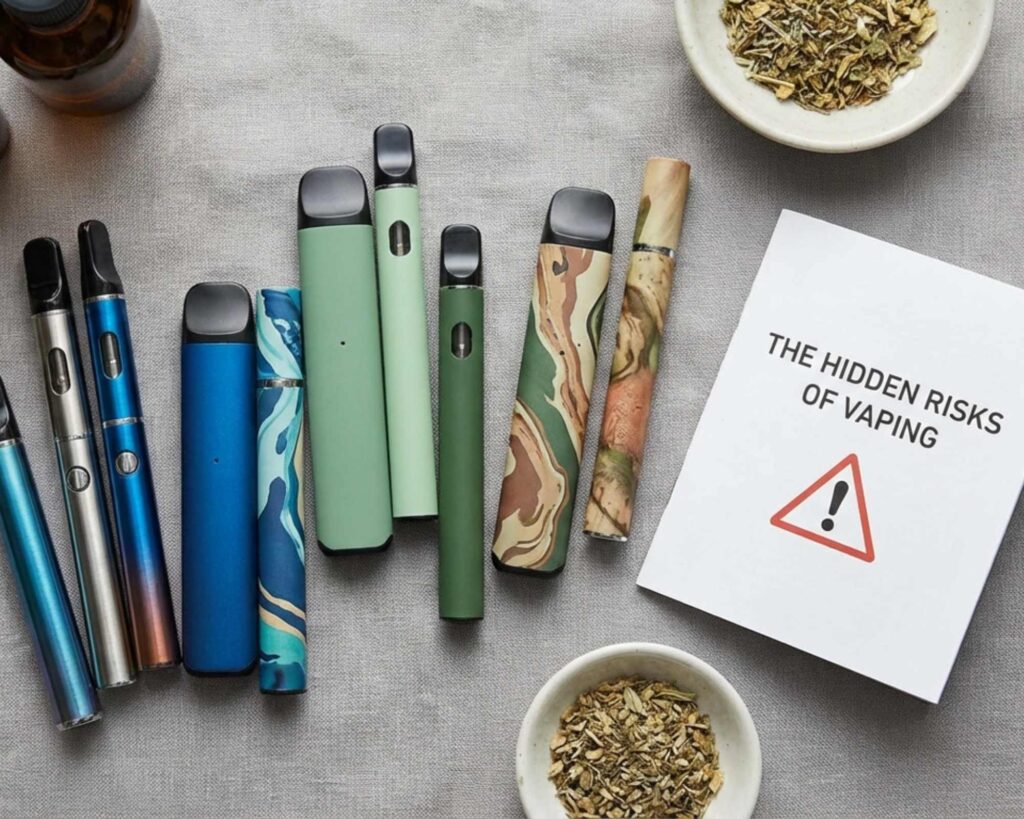
An essential oil vape pen is a battery-operated device that heats a liquid containing essential oils into an inhalable aerosol.
Brands market these diffusers by highlighting a nicotine-free experience. They push a mental health wellness angle rather than nicotine delivery, making them sound completely harmless.
But this is just a new package for an old, risky behavior. When you ask yourself what an essential oil vape is, you have to look past the slick marketing.
It mimics the exact same physical habits that keep you chained to a substance.
Why People Use an Essential Oil Vape
Why do people vape essential oils?
Often, folks are desperate for a quick mood and well-being boost. They see these portable aromatherapy devices as a “healthy” alternative to e-cigarettes or traditional nicotine products.
In early recovery, we often look for shortcuts.
We fall into a bargaining mindset, thinking we can trade a dangerous substance for a seemingly safe vape.
But keeping that ritual alive is a trap. You are simply trading one habit for another.
This leaves the door wide open for the psychology of vaping addiction to pull you back in.
Are Essential Oil Vapes Safe? Potential Health Risks
Are essential oil vapes safe? The answer is a clear no.
The American Lung Association warns against vaping essential oils because your respiratory system requires clean air only.
Heating these liquids creates harmful volatile organic compounds (VOCs).
Inhaling them directly causes serious lung inflammation. Some flavoring chemicals even contain diacetyl, which is linked to irreversible popcorn lung.
The Relapse Risk
Beyond physical health, the hand-to-mouth action and exhaling vapor are massive triggers.
I spent years caught in the physical motions that fueled my substance use.
Avoiding those specific rituals was vital to my addiction recovery.
Even with a “safe” product, mimicking the act of vaping strengthens deep neural pathways of addiction. This makes a relapse much more likely.
Safer Alternatives for Aromatherapy in Recovery
You do not have to inhale heated oils to find peace. Safer aromatherapy options exist, like running a traditional home diffuser or adding two drops of oil to a tissue.
| Alternative | How It Helps | Recovery-Focused Benefit |
|---|---|---|
| Room Diffusers | Disperses a calming scent safely into the air | Avoids the hand-to-mouth physical triggers |
| Mindfulness & Meditation | Lowers your heart rate and perceived stress | Rewires the brain to handle stress naturally |
| Community Support Groups | Provides accountability and shared empathy | Breaks the isolation that fuels substance use |
It is better to address the root need without mimicking a smoking habit.
Practice daily mindfulness, exercise, or connect with a recovery support group. These actions actually heal your brain. They provide genuine relief without relying on a deceptive device.
Different Kinds of Motivational Topics
Part of quitting vaping is listening to people who have lived and learned before you.
Tony Hoffman has done just that and is ready to share his experience with anyone who will listen.
Youth Speaker and Motivational Speaker for Schools
Young people are surrounded by products that look harmless and get marketed as healthy, aromatherapy vape pens, diffuser sticks, personal diffusers, all of it packaged to feel fresh and trendy.
As a motivational speaker for schools, Tony talks to students about what these devices actually do, how inhaling vapor from heated oils and liquid mixtures affects the lungs and body, and why the scent of peppermint or lemon does not change the risks.
It is real talk, not a lecture, and students respond to it because it is honest.
Motivational Speaker for College Students
College campuses are full of stress, and a lot of people are reaching for whatever promises relaxation and well-being without the stigma of smoking cigarettes or e-cigarettes.
Aromatherapy vapes fit right into that gap, positioned as a holistic approach to focus and calm. As one of the leading motivational speakers for college students, Tony addresses the real conversation around substances, devices, and the difference between managing stress and masking it.
He gives students a message they can actually use.
Mental Health Speaker
A lot of people who pick up a vape pen, whether it contains nicotine, essential oils, or a mixture of both, are looking for something to take the edge off.
Anxiety, pressure, the need for a moment of breath and calm. As a mental health speaker, Tony talks about what is actually driving that need and what supports well-being in a way that does not create new health risks.
The goal is not to shame anyone. It is to help people protect themselves and make decisions with full awareness of what they are inhaling.
Substance Abuse Speakers
The line between using an aromatherapy vape for relaxation and sliding into a nicotine habit or something harder is not always obvious until it is too late.
Some brands market their devices as a smoking cessation aid, a way to transition away from cigarettes by replacing the behavior with something that feels safer.
As substance abuse speakers, Tony works with treatment centers, recovery communities, and organizations to address exactly this kind of substitution thinking, where one habit gets swapped for another and the harm does not go away, it just changes shape.
Healthcare Motivational Speaker
Healthcare workers see the symptoms of inhalation damage, the lung issues, the allergies, the respiratory harm that builds over time.
They also know how hard it is to convince people that a product with a cute bottle and a lavender aroma could be a problem.
As a healthcare motivational speaker, Tony helps teams talk about prevention, behavior change, and the kind of message that reaches people before the damage is done. The safety conversation around vaping essential oils belongs in clinical settings, and Tony brings the energy to make that conversation stick.
Christian Speakers
The body matters. That is not just a wellness talking point, it is a conviction that runs through a lot of faith communities.
When people decided to adopt a holistic approach to health, part of that means being honest about what they are putting into their bodies, including the vapor they inhale from a vape pen marketed as natural and good for the aroma and soul.
As one of the most in-demand Christian speakers, Tony brings a message about stewardship, clarity, and protecting the life you have been given, without making it feel preachy or disconnected from real life.
Finding the Motivation to Quit Vaping Essential Oils
The essential oils in that vape pen might come from real plants, and the fragrance might smell incredible, but that does not mean inhaling heated vapor is safe for your lungs, your health, or your long-term well being.
The risks are real, the research is still catching up, and the companies selling these devices are not always forthcoming about what is actually in the liquid, the chemicals produced at high temperatures, or the symptoms that can develop over time from regular inhalation.
Tony Hoffman brings a message of regaining control with honesty, energy, and a story that no one forgets. Ready to bring it to your audience? Contact us or call (888) 707-3880 and let’s talk about what that looks like for your event.
Sources
PubMed Central. (June 21, 2021). Major Constituents of Cannabis Vape Oil Liquid, Vapor and Aerosol …. PubMed Central.
PubMed Central. (April 25, 2022). Alternative Flavored Inhalable Products—A New Respiratory Hazard?. PubMed Central.
U.S. Food and Drug Administration. (November 9, 2021). FDA takes action to protect consumers from vaping products with …. U.S. Food and Drug Administration.
University of California, Riverside. (October 23, 2025). Hidden toxins in e-cigarette fluids may harm lung cells. UC Riverside.
Texas A&M University. (March 5, 2026). Inside the Psychology of Vaping Addiction. Texas A&M University.
Centers for Disease Control and Prevention. (September 13, 2019). Outbreak of Electronic-Cigarette–Associated Acute Lipoid Pneumonia. CDC.
National Center for Biotechnology Information. (February 15, 2026). Lipoid Pneumonia – StatPearls – NCBI Bookshelf. NCBI Bookshelf.
University of Rochester Medical Center. (August 4, 2023). Summary of Diacetyl Research. University of Rochester Medical Center.
PubMed Central. (April 3, 2020). Vaping-Induced Lung Injury: A Case of Lipoid Pneumonia …. PubMed Central.
National Cancer Institute. (September 11, 2023). Aromatherapy With Essential Oils. National Cancer Institute.
Stanford Medicine. (February 9, 2023). ‘Cyclic sighing’ can help breathe away anxiety. Stanford Medicine.
Substance Abuse and Mental Health Services Administration. (June 9, 2023). National Helpline for Mental Health, Drug, Alcohol Issues. SAMHSA.
Centers for Disease Control and Prevention. (January 31, 2025). Health Effects of Vaping. CDC.
Keck School of Medicine of USC. (November 3, 2025). Among youth who vape, USC study finds rise in daily use and …. Keck School of Medicine of USC.
National Center for Biotechnology Information. (November 4, 2016). RECOVERY: THE MANY PATHS TO WELLNESS. NCBI.
PubMed Central. (January 16, 2024). Narrative Medicine: The Power of Shared Stories to Enhance …. PubMed Central.
PubMed Central. (August 10, 2023). Benefit of inhalation aromatherapy as a complementary treatment for …. National Library of Medicine.
FAQ
Is vaping essential oils safe for your lungs?
No research currently supports vaping essential oils as safe for the lungs. When oils are heated to high temperatures, they break down into chemicals that can cause irritation, allergies, and long-term inhalation harm. Natural ingredients do not automatically become safe when inhaled as vapor.
What is an essential oil vape?
An essential oil vape is a device, similar to a vape pen or personal diffuser, that heats a liquid mixture containing essential oils and sometimes vegetable glycerin to create an inhalable vapor. They are often marketed around aromatherapy benefits and sold as a holistic approach to relaxation, focus, or smoking cessation.
Are aromatherapy vape pens different from e-cigarettes?
They are different products, but the core risk is similar. Both involve inhaling heated vapor into the lungs. Aromatherapy vape pens typically do not contain nicotine, but that does not mean the oils, fragrance chemicals, and other ingredients are safe to breathe in on a regular basis.
Can essential oils help with smoking cessation?
Some brands market essential oil vapes and diffuser sticks as a smoking cessation aid, giving users the hand-to-mouth behavior without the nicotine. There is limited research to support this claim, and replacing one inhalation habit with another does not necessarily reduce harm to the body or lungs.
What essential oils do people commonly vape?
Lavender, peppermint, and lemon are among the most common oils used in aromatherapy vape devices. These oils are generally recognized as safe when used in a traditional diffuser with warm water and mist, but inhaling them as heated vapor is a different kind of exposure with different risks.
Author

Pro BMX athlete. Recovering addict. Motivational speaker. Tony Hoffman has lived several lives, and now he shares all of them. Since his release from prison in 2008, Tony has become one of the most powerful voices in mental health and substance abuse awareness.