
You might not imagine a sunny afternoon at the skate park could end in a prison cell, yet for Tony, that’s how methamphetamine addiction took hold: one day he was chasing BMX dreams, the next, just staying alive seemed like a victory. When someone’s trapped in that kind of desperation, immediate abstinence isn’t always possible or even safe. That’s where harm reduction comes in.
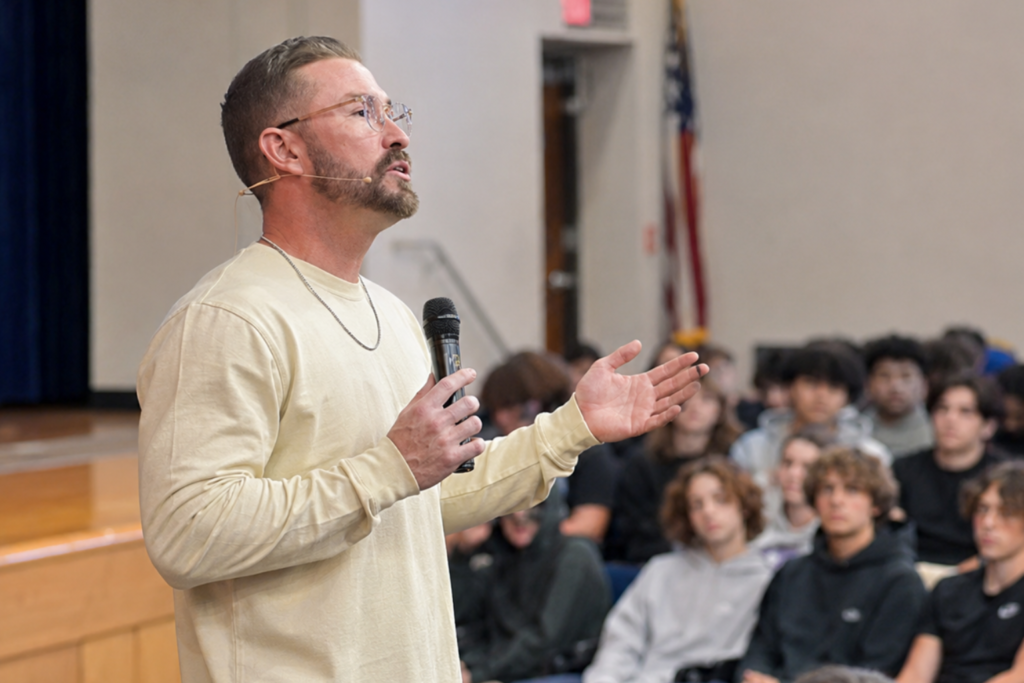
Tony has shared this story with audiences across the country as one of the most sought-after substance abuse speakers working today, bridging lived experience with practical education about what actually keeps people alive during the most dangerous stages of addiction. It’s not about giving up, but about making sure folks like Tony Hoffman have the chance to survive and eventually find a path toward real change. Understanding how harm reduction works could offer you or someone you love a lifeline when everything feels impossible.
What Is Harm Reduction?
The harm reduction definition centers on a compassionate, evidence-based public health approach that focuses on minimizing the negative consequences of drug use rather than demanding immediate abstinence. If you are asking what harm reduction means in everyday life, the simplest answer is this: it means meeting people exactly where they are, without judgment and without preconditions.
What is harm reduction in substance use, practically speaking? It is a set of strategies, services, and philosophies that prioritize human dignity and survival above all else. It acknowledges that for many people in active addiction, the immediate goal of staying alive must come before the longer-term goal of sobriety. You cannot get sober if you do not survive long enough to try.
For someone battling addiction, public health policies rooted in social justice can make the difference between life and death. Poverty, trauma, and systemic inequality all increase a person’s vulnerability to addiction and create real barriers to accessing traditional treatment. Harm reduction addresses these realities head-on rather than pretending they do not exist.
Tony knows firsthand that addiction strips away your dignity. Harm reduction is about showing mercy to people who feel completely unlovable; not giving them permission to keep using, but giving them the chance to survive long enough to find another way.
Abstinence vs. Harm Reduction: A Complementary Approach
A common misconception is that harm reduction and abstinence-based recovery are in opposition. They are not. Understanding what is harm reduction means understanding what it is not. It is not a rejection of sobriety as a goal. It is an acknowledgment that for many people, the road to sobriety runs through survival first.
A zero tolerance approach often pushes people further into the shadows. Strict models that demand immediate sobriety can be incredibly difficult, and sometimes physiologically dangerous, for someone locked in deep physical dependence. Harm reduction does not replace abstinence as an ultimate goal. It builds the bridge that makes abstinence possible for people who are not yet ready or able to take that step.
Recovery works best when we first focus on keeping the person alive. If you want to learn how to fight addiction, you have to start by preserving life. This complementary approach builds a solid foundation of trust. That trust is what eventually leads a person out of the darkness.
Essential Harm Reduction Strategies and Services
Transitioning from theory to practice requires looking at specific harm reduction strategies. These life-saving methods provide real tools to protect individuals and communities. Let us explore the most critical interventions available today.
- Syringe Services Programs (SSPs): Providing sterile equipment to reduce infectious diseases.
- Naloxone Distribution: Equipping communities with overdose reversal drugs.
- Fentanyl Test Strips: Allowing individuals to check their substances for fatal additives.
- Overdose Prevention Sites: Offering safe, supervised spaces to prevent fatal outcomes.
- Supportive Services: Connecting people directly to housing and medical care.
Syringe Service Programs (SSPs)
A Syringe Services Program, or syringe access clinic, is a vital public health tool. These centers provide clean needles to people who inject illicit drugs. By offering sterile supplies, they drastically lower the rates of HIV/AIDS and hepatitis C. Reducing HIV transmission is a massive victory for community health.
Some critics misunderstand these programs as enabling. However, they actually serve as crucial community touchpoints. They connect marginalized individuals with medical professionals and addiction treatment referrals. Building these connections is key to strengthening community health.
Naloxone Distribution
Opioid overdose is a leading cause of accidental death nationwide. Naloxone is a safe, highly effective medication that rapidly reverses these overdoses. Widening access to these overdose reversal drugs is absolutely essential. Families, friends, and community members should all carry it.
When overdose deaths threaten to tear communities apart, naloxone offers an immediate lifeline. It restores breathing and provides a second chance at life. Handing someone naloxone is a direct act of love and preservation.
Fentanyl Test Strips and Drug Checking
The modern landscape of illicit drugs is incredibly dangerous. The fentanyl crisis has contaminated everything from counterfeit pills to cocaine. Fentanyl test strips are simple tools that detect these deadly additives. Drug checking allows individuals to make informed, life-saving choices before consuming a substance.
We must face the grim reality of this contaminated supply. By integrating detecting fentanyl in drugs into community education, we prevent accidental poisonings. These strips do not encourage drug use. They simply keep a lethal mistake from becoming a permanent tragedy.
Does Harm Reduction Actually Work? Examining the Evidence
When communities consider these programs, one question always arises. Does harm reduction work? The public health data provides a very clear answer. If you are wondering if harm reduction actually works, you only need to look at the statistics.
Public health research shows that syringe access programs reduce risk behaviors by as much as 50 percent. Furthermore, needle exchange programs have reduced HIV incidence by an impressive 33 percent. These interventions drastically lower disease transmission and save healthcare systems millions of dollars. The evidence supporting these methods is overwhelming.
The overdose epidemic requires solutions that yield measurable results. For example, recent data from New York showed a massive drop in fatalities. Overdose deaths fell from 6,688 in 2023 to 4,567 in 2024. Notably, 77% of those tragic fatalities involved opioids like fentanyl.
Widespread naloxone distribution plays a massive role in reducing those numbers. We know that providing naloxone to substance users directly reverses fatal events. It does not magically cure the underlying addiction. However, it demonstrably keeps people alive long enough to seek help.
Not Enabling: How Harm Reduction Saves Lives
A common fear is that harm reduction programs simply enable drug-related harm. In reality, they do the exact opposite. They protect community life by reducing public drug use and discarded medical equipment. Decades of data prove that these services do not increase crime or drug abuse.
Tony often speaks about how grace must meet people in the dark. Keeping someone breathing is the non-negotiable prerequisite for transformation. By offering compassionate support without immediate demands, we build trust. That trust eventually encourages people to take the next step toward a healthier future. You can learn more about healing from addiction step by step when the time is right.
Next Steps: Implementing Safer Practices in Your Community
Taking action requires a community-wide commitment to compassionate care. You can implement safer practices right now, whether at home or within local organizations. The National Harm Reduction Coalition provides excellent resources for technical assistance and training. Education is always the first step toward breaking the stigma.
Here are simple ways to start implementing safer practices today:
- Carry naloxone: Keep this life-saving medication in your home and vehicle at all times.
- Avoid using alone: Encourage loved ones to establish concrete safety plans.
- Locate local services: Find the nearest syringe exchange and support centers in your area.
- Expand prevention education: Host open, honest conversations about drug safety in your community.
- Call for help: Keep the National Helpline for Mental Health and Substance Issues saved in your phone.
Transformation is always possible, even from the darkest places imaginable. Tony’s story proves that rock bottom does not have to be the end. When communities choose empathy over judgment, absolute miracles happen. Real change starts when we decide to meet people exactly where they are.
Every Life Kept Alive Is a Recovery Story Still Being Written
Addiction is a brutal battle, but no one has to fight it without a lifeline. By embracing practical safety measures, we prioritize life, dignity, and the genuine possibility of recovery. Keeping someone safe today gives them the precious time they need to heal tomorrow. If your organization wants to learn more about overcoming addiction through powerful, lived-experience storytelling, reach out to Tony Hoffman. You can connect with our team by calling (888) 707-3880 to discuss booking substance abuse speakers for your next event. Equip your community with the proper tools to save lives, and start building a foundation where real transformation can take root. Contact Tony Hoffman today.
Sources
(March 20, 2024). Strengthening syringe services programs (ssps). Centers for Disease Control and Prevention.
(April 2, 2026). Syringe services programs. HIV.gov.
National Center for Biotechnology Information. (April 12, 2023). The impact of needle and syringe exchange programs on hiv incidence: a systematic review and meta-analysis. PubMed Central.
(April 2, 2024). What you can do to test for fentanyl. Centers for Disease Control and Prevention.
Wheeler, A., et al. (January 1, 2007). Providing naloxone to substance users for secondary prevention. Harm Reduction Journal.
(May 31, 2024). Naloxone access improved in new york city in high overdose areas, but gaps remain across the five boroughs. Leonard Davis Institute of Health Economics.
National Center for Biotechnology Information. (October 24, 2017). Harm reduction principles for healthcare settings. Harm Reduction Journal.
(February 23, 2026). Communities talk to prevent alcohol and other drug misuse. Substance Abuse and Mental Health Services Administration.
(June 9, 2025). Public health considerations for strategies and partnerships. Centers for Disease Control and Prevention.
(May 28, 2022). Best practices for community-based overdose education and naloxone distribution. Harm Reduction Journal.
FAQ
What is harm reduction in substance use?
Harm reduction is a public health approach focused on reducing the risks and negative consequences associated with drug use rather than simply punishing or shaming people who use drugs. Harm reduction focuses on protecting health, preventing overdose deaths, lowering the spread of infectious diseases like HIV and viral hepatitis, and connecting people with medical care, mental health services, and social services. The harm reduction definition centers around the belief that people deserve safety, dignity, and support regardless of where they are in their recovery or substance use journey.
What are some examples of harm reduction strategies?
Examples of harm reduction strategies include syringe service programs, overdose prevention education, naloxone distribution for opioid overdose reversal, sterile needles, alcohol swabs, wound care services, drug consumption rooms, and safer injection equipment access. Harm reduction programs may also provide health and social services, testing for sexually transmitted infections, hepatitis B screening, counseling, and referrals to addiction treatment or medical services. These interventions are designed to minimize drug related harm while reducing risky behaviors connected to injection drug use and illicit drug use.
Does harm reduction actually work?
Research continues showing that harm reduction interventions can have a positive impact on both individuals and communities. Harm reduction services are considered cost effective because they help reduce overdose deaths, emergency medical costs, and the spread of infectious diseases among injection drug users and other drug users. Studies have also shown that syringe programmes and overdose education can help prevent transmission of HIV and viral hepatitis while increasing access to treatment, recovery resources, and health care services for people struggling with substance use disorder.
Does harm reduction encourage drug use?
One common misunderstanding is that harm reduction policies encourage drug use or support illegal drugs. In reality, harm reduction programs are designed to keep people alive and reduce the dangers associated with drug use while helping individuals access support and treatment when they are ready. Not everyone struggling with substance use is immediately prepared for abstinence based treatment, but a non judgmental approach can still reduce harm, improve public health outcomes, and create opportunities for positive change and recovery over time.
Why is harm reduction considered important for public health?
Harm reduction is important because it addresses substance use through compassion, education, and evidence based health strategies instead of viewing addiction as a moral failing. People who inject drugs often face barriers related to economic status, housing instability, stigma, gender identity discrimination, mental health challenges, and limited access to medical care. Harm reduction services help bridge those gaps by connecting people with resources, overdose prevention support, health services, and addiction treatment options. Many public health experts believe harm reduction saves lives while strengthening healthier and safer communities overall.
Author

Pro BMX athlete. Recovering addict. Motivational speaker. Tony Hoffman has lived several lives, and now he shares all of them. Since his release from prison in 2008, Tony has become one of the most powerful voices in mental health and substance abuse awareness.